
There was a time when the phrase “a good man” carried moral weight.
It did not mean a harmless man, nor a man subdued by guilt or fashion, but a man who had learned to master his own capacity for destruction. A good man was dangerous, disciplined, and devoted. He could protect without posturing, and provide without pride. He was not defined by his gentleness, but by the fact that his strength was governed by conscience.
Today, that image has been rewritten, blurred into satire.
Masculinity, once seen as a structure to aspire toward, is often treated as a pathology to be cured. The language of progress has mistaken restraint for repression, and authority for arrogance. Young men are told to apologise for their existence before they have even begun to live it. They are taught that masculinity is synonymous with control, that fatherhood is optional, and that the highest virtue is neutrality.
But a culture without fathers drifts.
Not only the biological fathers who vanish from the home, but the symbolic ones – the teachers, mentors, craftsmen, and quiet men who hold the line in unseen ways. When these figures disappear, the next generation does not grow freer; it grows lost. It begins to seek initiation in chaos rather than order, through addiction, rebellion, or rage. A man who is not initiated into strength will be initiated into weakness.
True masculinity is not an act of domination; it is an act of containment.
It is the willingness to hold tension rather than discharge it, to stand firm when others collapse into impulse or fear. It is the unglamorous art of keeping promises when no one is watching, of showing up for children who do not yet understand what loyalty costs. It is patience without passivity and conviction without cruelty.
In separated parenting, these virtues are tested most fiercely.
The good man must learn to love his children through absence. He must survive the dismantling of the home without becoming embittered by it. When false allegations arise, as they too often do in the fog of fear and litigation, he must resist the temptation to answer chaos with chaos. The strong man holds his ground in truth, even when the institutions meant to protect him turn away. He fights not for revenge but for relationship. He knows that integrity is the only form of justice time never erodes.
And yet, to champion men is not to diminish women.
The good man does not fear the rise of women; he welcomes it. He understands that the feminine and the masculine are not enemies but counterweights in the same balance. Where she brings empathy, he brings structure; where she offers intuition, he offers steadiness. Together they form the architecture of human flourishing. The war between the sexes was always a false war, waged by those who profit from division.
A culture that truly honours women must also honour men.
A culture that mocks fathers will ultimately wound its daughters, leaving them to seek in strangers the steadiness that once came from home. The child who grows up believing her father disposable learns, unconsciously, that love itself is disposable.
To rebuild the sacred geometry of family, we must recover the image of the father who protects without oppression, who disciplines without humiliation, who loves fiercely but never possessively. This is the masculine archetype that restores, not ruins; that plants roots instead of fleeing responsibility.
A good man does not shout his goodness. He builds it. He rises early, carries burdens quietly, admits when he is wrong, and still chooses to lead. He does not demand belief, he earns it through service. And when he falls, as all men do, he stands again without self-pity.
The path of positive masculinity is not a public performance; it is a private vow.
It begins in the unseen hours—when a man turns away from despair and toward duty, when he teaches his sons to be both kind and unyielding, and his daughters to expect no less. It continues when he refuses to let bitterness define him, even in the aftermath of betrayal. It ends not in triumph, but in peace: the quiet knowledge that he became what he once needed to see.
For the good man is not extinct.
He is simply uncelebrated.
He is the one rebuilding what was broken, stone by stone, word by word, without applause.
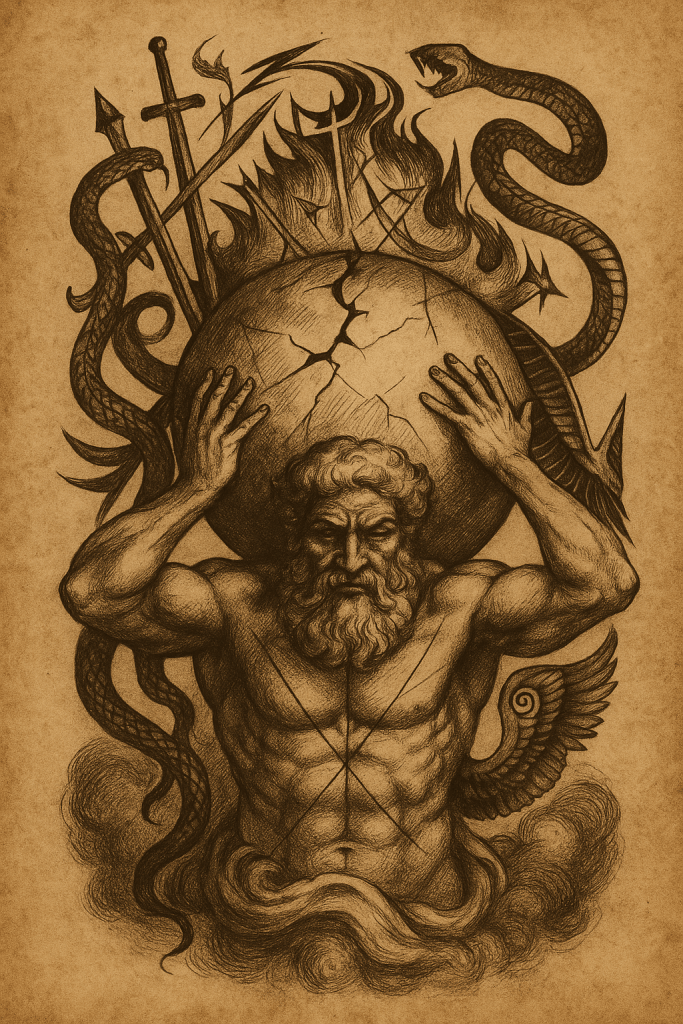
And it is upon his shoulders, not the slogans of the age, that the future still depends.
 Reade Saunders
Leave a comment