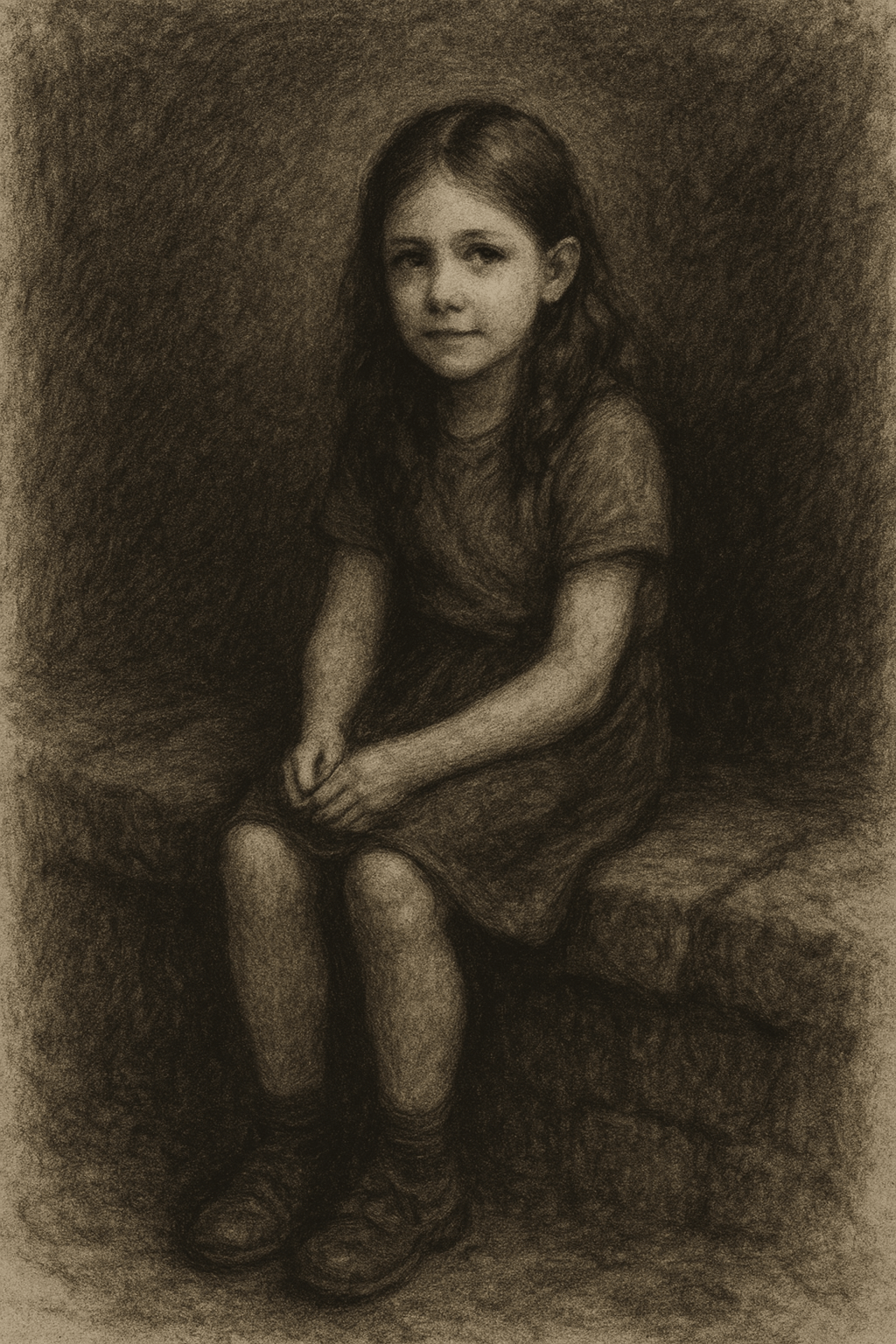
Karen did not unravel. She was never tangled to begin with.
Her life, like the lives of so many women raised in the shadow of grief, was tightly wound, controlled, cautious, curated.
Her brother died when she was seven.
She never spoke of it with clarity. Only the occasional reference to a surgery, to her mother’s closed expression at the table, to a time when his name suddenly carried more weight in the house and hers wasn’t heard.
And then, much later, a sister appeared. Not new, just previously unacknowledged. Adopted out. Forgotten by design.
Karen learned, with remarkable efficiency, that the family system was not built for transparency. It was built for containment.
In this silence, she developed what the textbooks might call a dissociative posture.
To survive emotionally, she had to separate. Separate what happened from what was allowed to be felt. Separate who she was in public from the unresolved ache she carried privately.
By the time she became a mother, she had perfected this split.
Karen knew how to sound intelligent. How to advise. How to comfort with language. But she did not know how to sit beside pain without trying to control it.
And control, in her world, looked like moral positioning.
It looked like neutrality. Professionalism. A raised eyebrow, a softly spoken concern, a document handed to someone in authority.
She cast herself as a voice for the vulnerable, a defender against abuse, a legal conscience in the machinery of the state. She told this story often, and she told it well. It was the scaffolding she lived inside: strong, coherent, admirable.
When her son began to fracture –under the weight of divorce, of conflict, of new love and old wounds –she didn’t meet him with motherly tenderness.
She stepped back.
Then she stepped sideways.
And finally, she aligned herself with the people trying to dismantle him.
She called it concern.
She framed it as duty.
But it was, as it had always been, about fear.
Karen feared irrelevance. She feared chaos even though she embraced it. She feared being seen as complicit in any failure.
And when her son stood up as a man – fierce, articulate, alive.. he threatened the scaffolding she’d spent a lifetime constructing.
So she rewrote the narrative.
She wasn’t the mother who failed to protect.
She was the grandmother who raised concern.
She wasn’t the woman who never processed her grief.
She was the professional offering insight.
But beneath all of it, the wound remained.
And when the dust settled, she stood exactly where her father once had – estranged, rational, and quietly certain that love must be earned by compliance, yet hollowed by a sadness that had nowhere safe to go.

It is difficult to overstate how often this pattern recurs: the child of unresolved grief becomes the adult who cannot bear disorder, who cannot tolerate ambiguity except by turning it into control. Early losses breed a permanent suspicion of intimacy, and so even fertility itself is shadowed by doubt.
But control is not love. Compliance is not attachment. And when compliance is made the condition of love, families fracture across generations in precisely the same way. Karen’s father wrote imploring letters to a daughter he did not know. Decades later, Karen would position herself in identical distance from her own son, convinced of her moral rectitude even as she repeated the exile she once endured.
The scaffolding holds, but the house within remains empty.
Reconciliation is not impossible. But it requires that the scaffolding collapse, that fear yield to sorrow, that duty make space for tenderness. Most families never risk it. The question remains: will this one?
 Reade Saunders
Leave a comment