I thought I understood love.
At least, I had mimicked the posture of it. I’d held hands, spoken vows, walked the straight line of domestic duty. I had smiled in photographs and stood still in kitchens with the weight of a thousand invisible expectations pressing against my chest.
But when I met her, I realised none of it had ever really started.
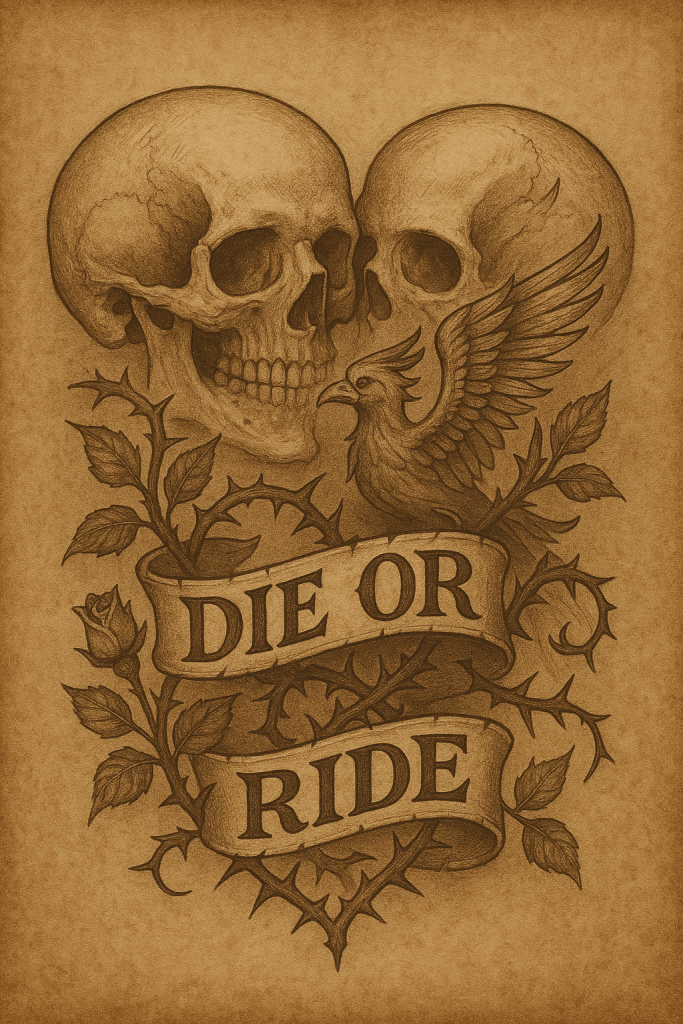
She didn’t rescue me. She didn’t complete me. That’s not how this works. She simply stood in front of me, unflinching, and dared me to be whole.
And suddenly, I could see all the ways I’d been half.
She arrived like Persephone after winter,
with dirt on her hands and seeds in her hair.
Not to be worshipped—
but to show me what could grow.
She was already a mother. Already in flight from a loveless landscape, one foot still tangled in thorn. She didn’t want saving, she wanted someone who could stand still beside her while she learned how to walk free.
And in doing so, she taught me how to move. Not performatively, not as a projection of the man I thought I had to be – but as the one I never thought I could.
I had no model for this. No template. My childhood was a museum of estrangements, unfinished sentences, and withdrawn affections. My blueprint for partnership was absence layered over contradiction. Intimacy had always carried terms and conditions, emotional withholding disguised as pragmatism.
And now – suddenly – I was being asked to love freely. No ledger, no performance. Just presence.
She did not reach for my wounds.
She watched, and waited.
She laid a feast for the man I might become—
and let me arrive starving.
Her presence forced a reckoning with every female relationship I had misread.
They saw her as an invader, a usurper of loyalties. But she hadn’t taken me from anyone. She simply opened a door I hadn’t known was locked.
And I walked through.
And as I did, I saw behind me the shapes of women who only loved the version of me they could control. Who called it concern, called it family, called it love – but it was really possession dressed in the language of care.
Because the moment I began to shine again, began to live, laugh, build, they recoiled.
A man reborn is a threat to the gravekeepers.
Especially if he no longer asks permission to dance.
They mourned the “old me,” the one they could manipulate, the one they could pity. Not because he was better, but because he made them feel better.
But she loved the man I was, and kept space for the man I was becoming. Not in fragments, not for function, not for family optics—but because she saw the whole. And gave me space to grow into it.
She made me want to be good. Not in the moralistic sense, but in the deep masculine sense of presence, integrity, protection, joy.
And now?
Now we build.
It’s hard, often. We’re both stitched with old scars. But the difference is—we’re not trying to win. We’re trying to stay. To heal. To raise children in a home with laughter that doesn’t come with a cost.
And some days, when I look at her across a messy kitchen or a chaotic bedtime or a Sunday afternoon thunderstorm, I can’t help but thank God, not just for her, but for the fire she brought with her.
A fire that didn’t burn me down – but burned the things I never needed.
She was never the storm.
She was the sky behind it—
vast, aching, and lit by a kind of light
I had forgotten was possible.
I love you.
Don’t I
 Reade Saunders
Leave a comment