A child is not born with a personality. He is born with a temperament, yes, but personality? That’s a slow accretion. It comes in layers, like sediment, each compacted by experience, repetition, and the small betrayals or affirmations of daily life.
I didn’t understand this until I saw it from the other side – until I became a father, and later, a stepfather. Until I watched in real time as children’s personalities formed not from grand events, but from the granular rituals of home life: who listens when they speak; who notices their sadness; who disciplines without humiliation; who vanishes without explanation.
Modern psychology gives names to these forces. Erik Erikson called it psychosocial development, a series of stages, each one requiring trust, autonomy, initiative, competence, identity. Fail too many of these early tests, and the whole scaffolding creaks.
Jordan Peterson speaks often of conscientiousness and agreeableness, traits shaped both by disposition and early conditioning. He argues that the world punishes those who fail to integrate these characteristics: the disorganised, the resentful, the perpetually externalising. I’ve seen this in my own children—how one’s natural boldness became rebellion when not anchored in affection; how another’s sensitivity collapsed into anxiety when exposed to chronic maternal stress.
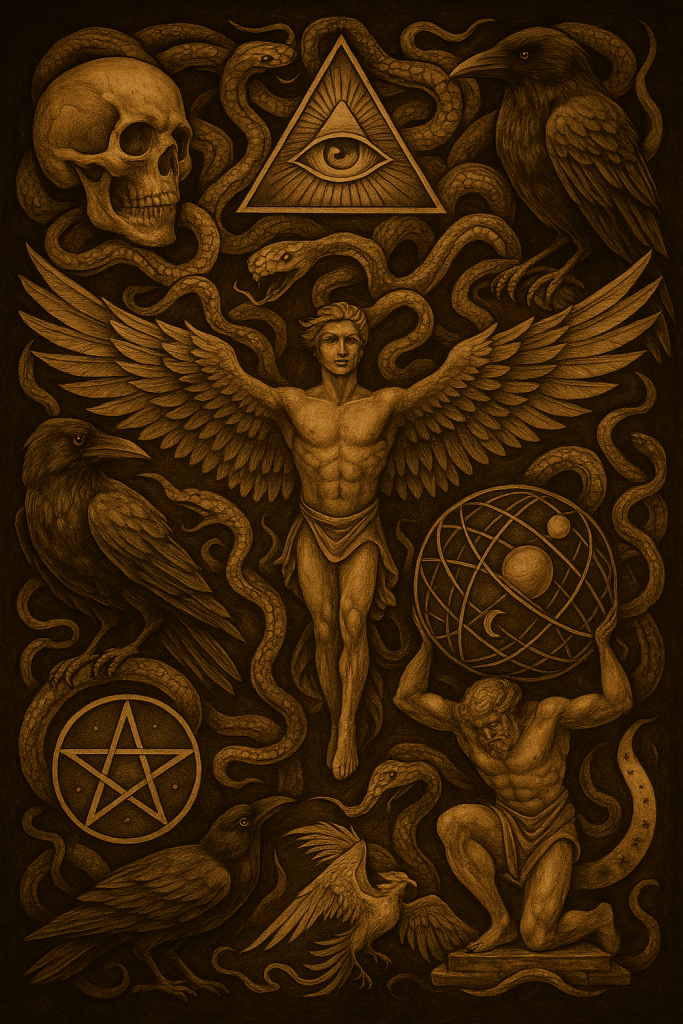
Jonathan Pageau would remind us that a child is a microcosm of the cosmos. That they are shaped not only by nurture, but by meaning. Patterns, archetypes, stories—they don’t just explain the world to children. They create it. And when those stories are broken or inverted—when the mother wounds instead of nurtures, when the father disappears instead of protects—the pattern still embeds itself. But it teaches something grotesque. It mutates.
It’s fashionable in liberal psychology to frame children as resilient. But resilience is not the same as healing. Children survive trauma by adapting to it. They become what they need to become to avoid abandonment or wrath. The danger is not that they are broken—it’s that they become functional. As Gabor Maté puts it, “Children would rather be bad than be alone.”
Attachment theory tells us that children calibrate their entire emotional range to match their caregivers. If Mum is cold, you learn to be quiet. If Dad is volatile, you learn to tiptoe. If both are absent, you become both parent and child to yourself—an impossible task with a devastating cost.
In my case, I was told I was important. But what I learned was that I was needed. Not for who I was, but for the hole I filled. I was the son born to redeem a mother from her own story. And you can’t say no to that without becoming the villain in her next chapter.
Clinical literature describes this as parentification. The child becomes the therapist, the conscience, the emotional regulator. And when they inevitably fail—as all children must—it confirms the parent’s belief in betrayal, and the child’s belief in unworthiness. It’s a feedback loop that tightens with age, until the only way out is rupture.
This is how a personality forms. Through small negotiations with power, with silence, with expectation. Through desperate attempts to make sense of what no one is explaining. Through rituals of compliance, rebellion, and finally resignation.
And by the time the child is a man, he no longer knows what is performance and what is self. He only knows what keeps him safe. And what makes him invisible.
 Reade Saunders
Leave a comment